
.jpg)
Sustainability teams are under more pressure than ever. Regulatory requirements are tightening across Asia Pacific and beyond, data volumes keep climbing, and the expectations around audit-readiness are higher than they have ever been. What makes this challenging is that all of these are often managed by small, lean teams who are already stretched thin across competing priorities.
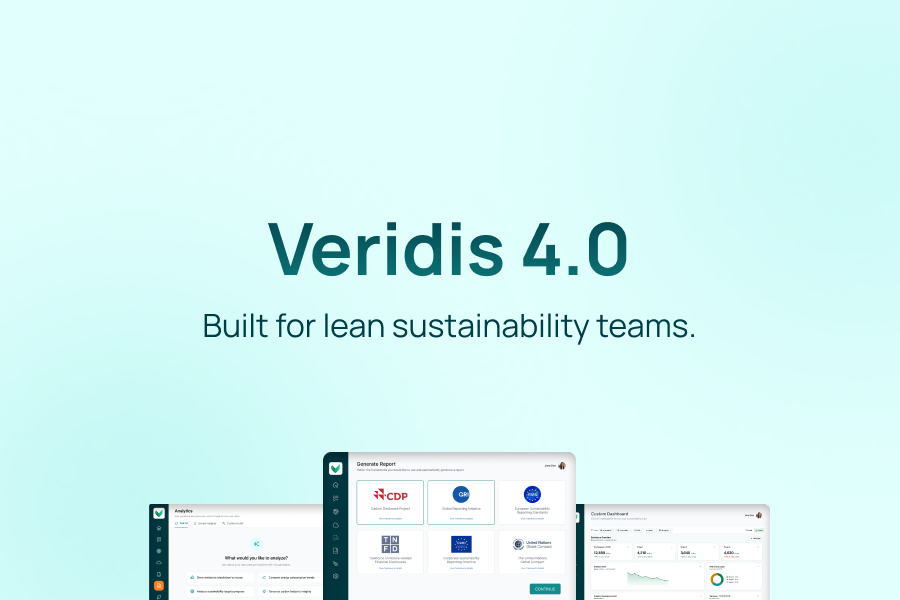
That pressure isn't going away, which means the tools sustainability teams rely on need to be able to keep up. That's the thinking behind Veridis 4.0, Zuno Carbon's latest platform upgrade and a ground-up rebuild of its Sustainability OS, designed to handle the scale, speed, and complexity that modern sustainability management demands. It's faster, more accurate, and built around AI-powered workflows, so teams can spend less time chasing data and more time doing the work that makes an impact.
Why we built Veridis 4.0
Veridis 4.0 wasn't built on assumptions. It was built on evidence gathered directly from the people who use the platform every day.
Before a single line of code was written, the Zuno Carbon team reviewed hundreds of support tickets and feature requests, ran structured interviews and workshops with client teams to surface real operational pain points, and analysed proposals from recent sales cycles to understand what sustainability leaders actually need from a platform today.
Three themes came through consistently:
- Teams are drowning in data coordination. Managing emissions data from dozens of business units, subsidiaries, and suppliers means constantly chasing inputs, reconciling conflicting numbers, and trying to keep track of who submitted what and when. It's time-consuming, error-prone, and it pulls sustainability managers away from the strategic work they're supposed to be doing.
- Reporting is still far too manual. Even organisations using dedicated sustainability software spend enormous amounts of time formatting, aligning, and validating data before it can go into a disclosure. The grunt work persists because the tools haven't been designed to eliminate it.
- The technology has moved on. AI capabilities that didn't exist a few years ago can now scan documents, surface insights from large datasets, flagging anomalies, and generate draft reports. Sustainability platforms need to keep up.
Veridis 4.0 was built to address all three.
What's new in Veridis 4.0
Veridis 4.0 includes everything that existing users know from Veridis 3.0, along with a substantial set of new capabilities developed in direct response to what clients told us they needed most:
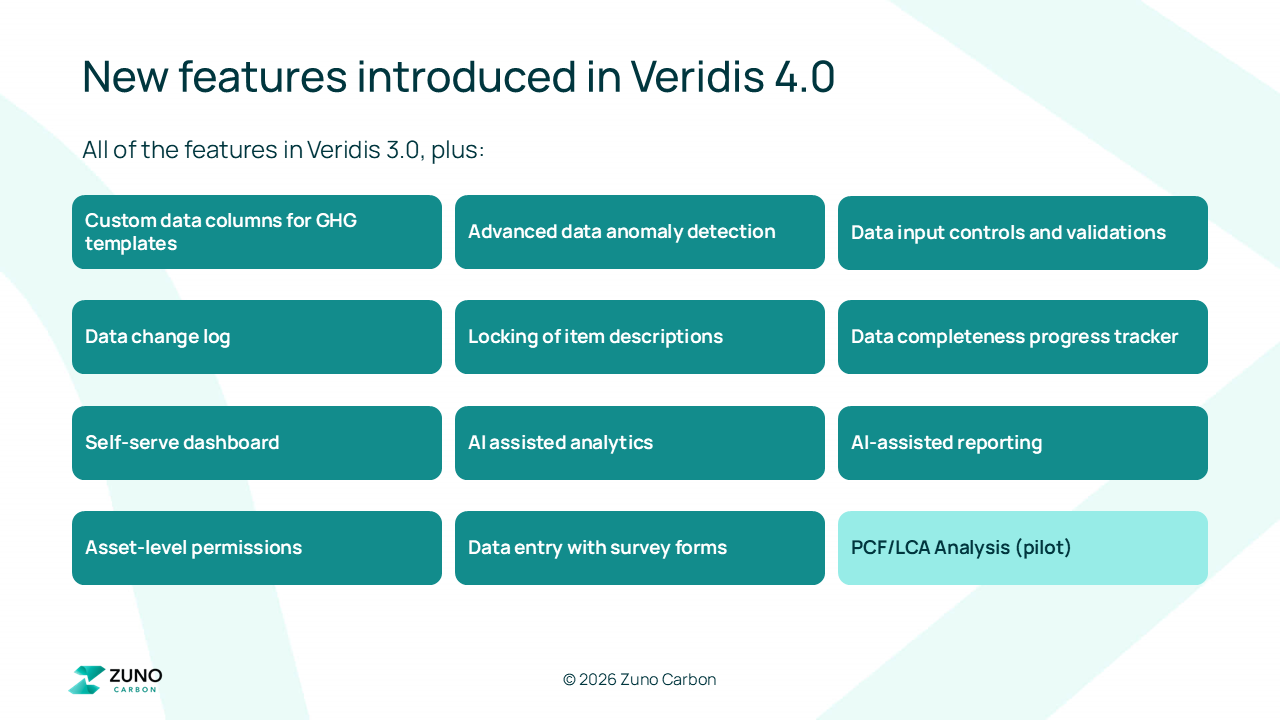
Four modules, one unified platform
Veridis 4.0 is structured around four core modules that cover the full end-to-end sustainability data lifecycle.
1. Integration
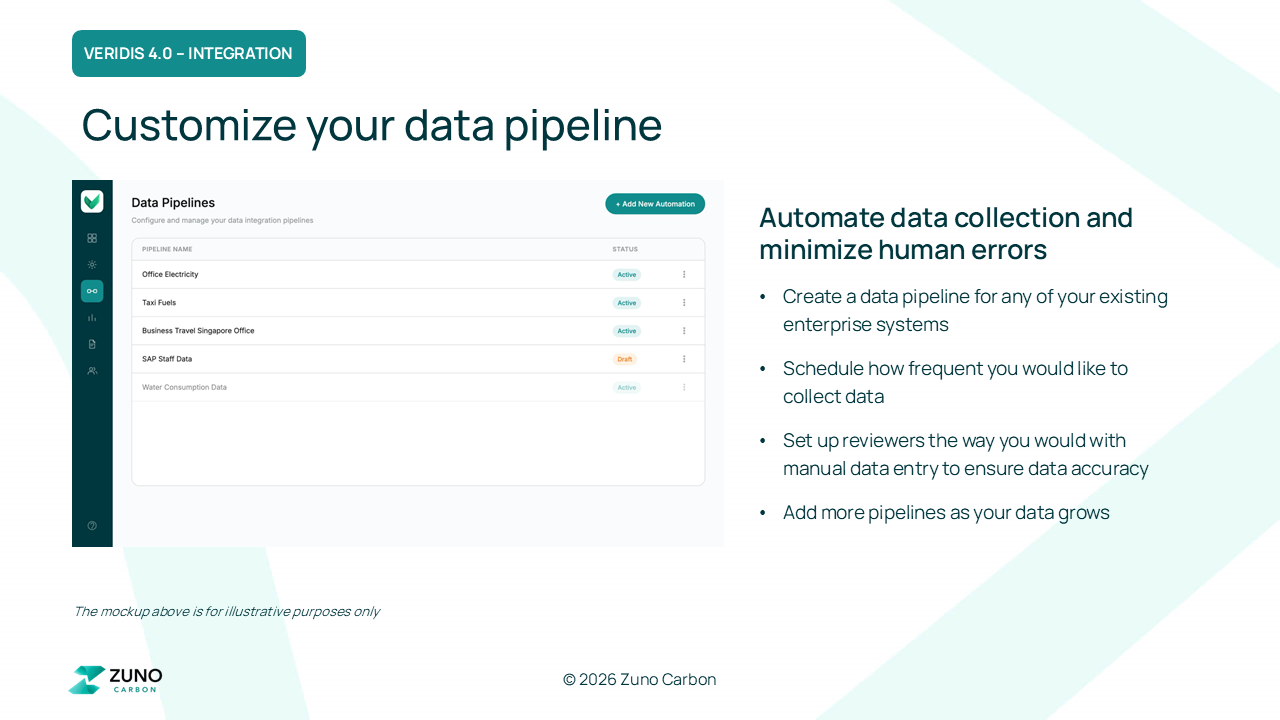
Getting data into the platform has always been a bottleneck, and it's usually the step that introduces the most errors. The Integration module lets teams build automated data pipelines that connect directly to existing enterprise systems, whether that's an ERP, a utility billing platform, an HR system, or any other source where relevant data already lives.
From there, teams set the collection schedule, define the review and approval workflow, and add more pipelines as their data footprint grows. The result is cleaner, more consistent data arriving without the manual effort or the errors that come with copying numbers between systems.
2. Measurement
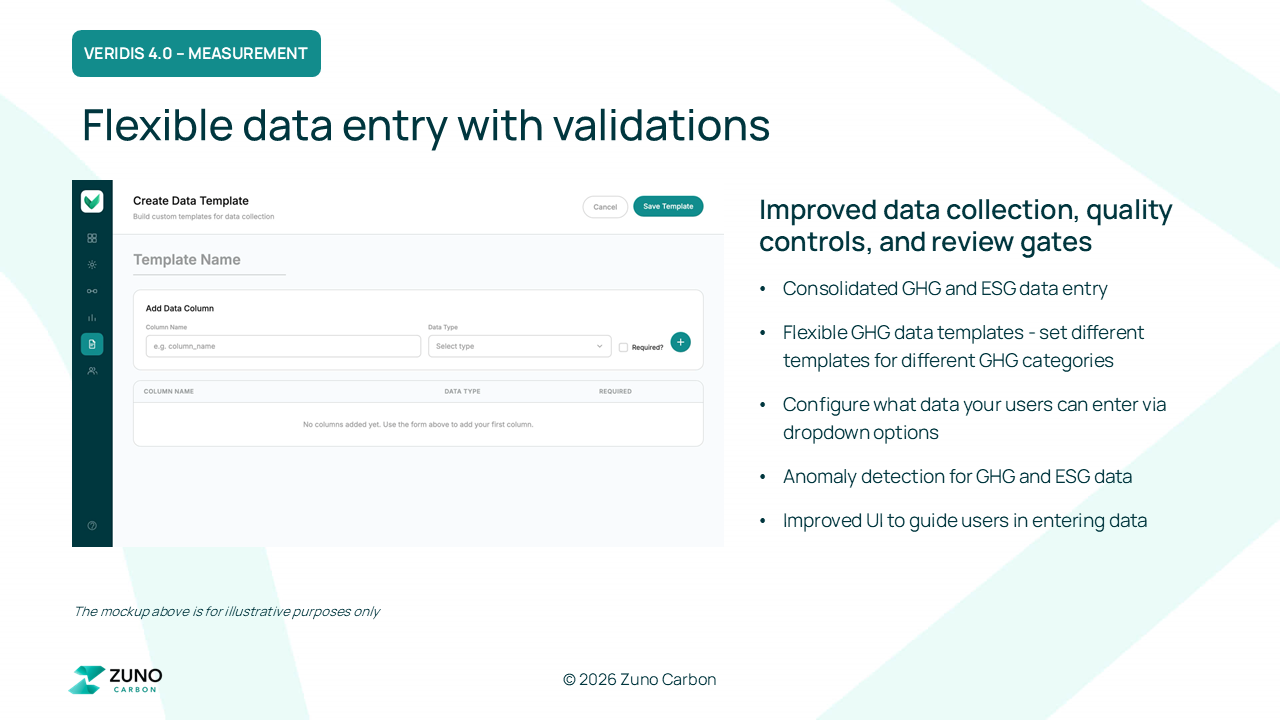
The Measurement module is where data lives, and it's one of the areas where Veridis 4.0 represents the most significant rethink of how teams interact with the platform.
GHG and ESG data collection is now unified in a single interface, with fully configurable templates for different GHG categories depending on what each requires. Users are guided through data entry with validations and dropdown controls that catch errors before they happen, and anomaly detection runs continuously in the background, flagging any unusual figures for review before they flow downstream into reports.
For teams preparing for assurance or regulatory review, this kind of systematic quality control built into the collection process is what makes audit season manageable.
3. Analytics
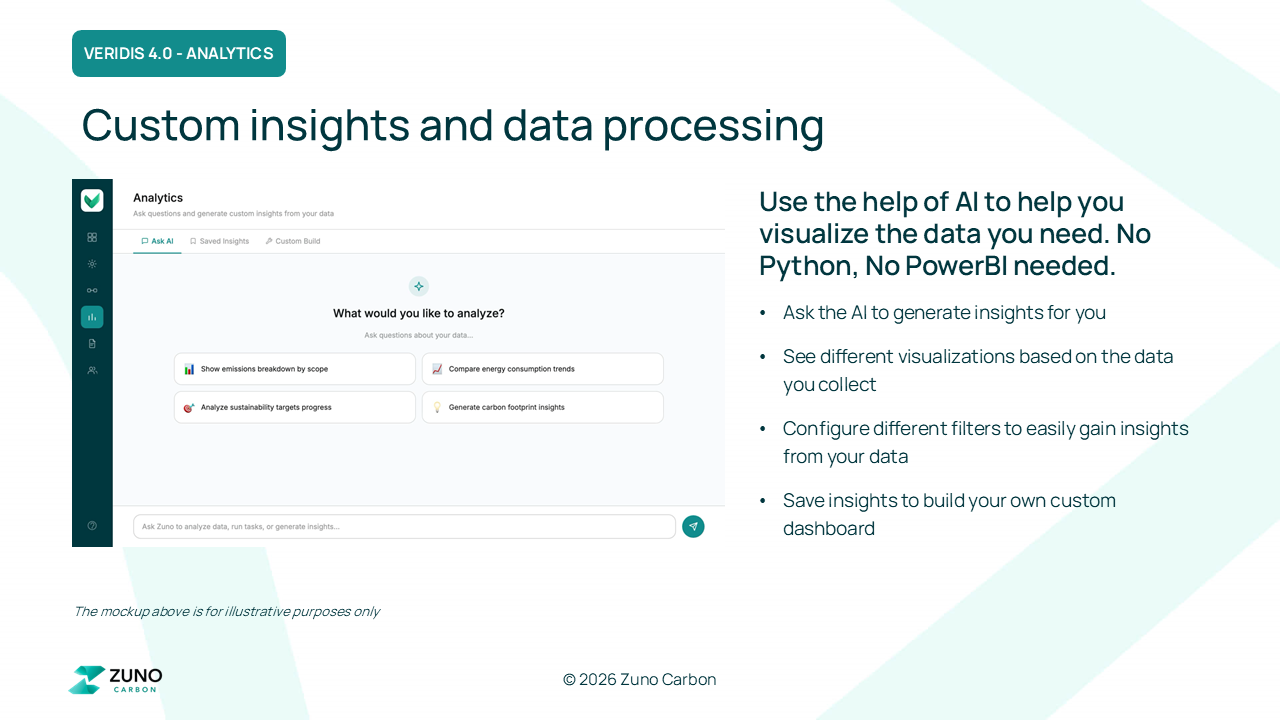
Most sustainability teams don't have a data analyst on staff, and they shouldn't need one to answer basic questions about their own data. Yet getting useful answers has typically meant either having technical skills that most sustainability professionals don't have, or waiting on a data team with its own priorities and timelines.
The Analytics module changes that dynamic entirely. Teams can ask the AI to generate insights in plain language, explore different visualisations built from the data they collect, and save results into a custom dashboard. For users who want more control, a visual chart builder and SQL mode are both available, so everyone can work at the level they're comfortable with rather than being forced into a one-size-fits-all interface.
4. Reporting
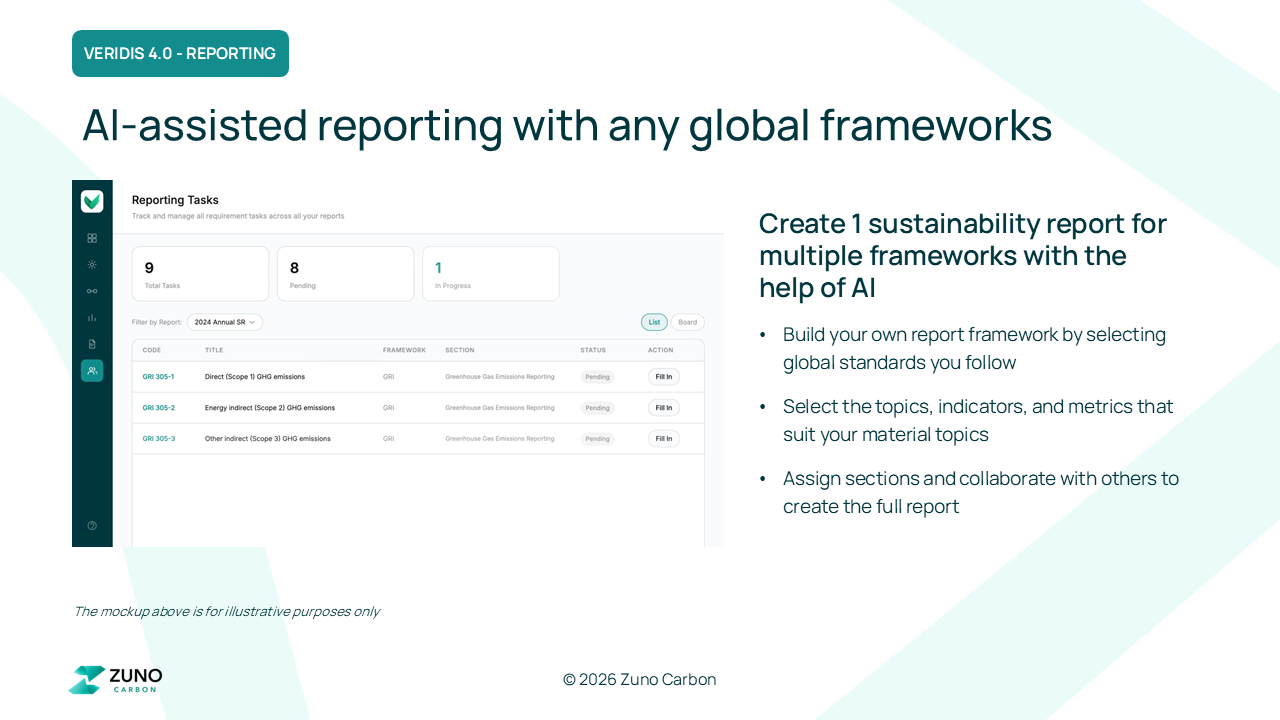
Sustainability reporting has become increasingly complex, with organisations needing to satisfy multiple frameworks simultaneously. GRI, ISSB and local regulatory requirements often overlap significantly in terms of the underlying data they need, but teams spend significant effort reformatting it for each framework.
The Reporting module lets teams build a custom reporting framework aligned to the global standards they follow, then map their existing data to the topics and metrics each framework requires. Different sections of the report can be assigned to different team members for collaboration, and AI assistance is available throughout to help draft narrative content. The result is a single report that satisfies multiple disclosure requirements without requiring teams to start from scratch each time.
Built for lean sustainability teams
Sustainability managers at mid-to-large enterprises are often working in small teams, sometimes just one or two people, against a backdrop of growing regulatory requirements, increasing stakeholder scrutiny, and data scattered across business units and geographies. The stakes are high and the margin for error keeps shrinking.
Veridis 4.0 was designed with that reality in mind. Workflows are streamlined from data collection all the way through to reporting, insights, and decision-making, so sustainability teams can manage large volumes of data in one place. Audit trails are built into the platform from the ground up rather than added as an afterthought, which means the documentation that regulators and auditors expect is always there.
The platform can now ingest up to ten times the data volume of its predecessor with better speed and stability. Role-based permissions at the asset level give large organisations the governance controls they need without creating friction for the people doing the work.
Built with AI-first features in mind
There's an important distinction between a platform that has bolted AI features on top of an existing product and one designed from the outset with AI at its core. Veridis 4.0 is the latter.
AI capability is woven into the everyday workflows sustainability teams already rely on:
- AI file ingestion: relevant data is automatically extracted from documents, invoices, and other unstructured sources using optical character recognition, significantly reducing the manual data entry that takes up so much time during reporting periods
- AI-assisted data visualisation: the platform surfaces the charts and trends most relevant to your data without requiring any manual configuration, making it easier to spot patterns and communicate findings to stakeholders
- AI-assisted data transformation: raw inputs are converted into processed metrics ready for reporting, removing one of the most time-consuming steps between data collection and disclosure
- AI-assisted reporting: the platform drafts disclosure content directly from the data you have already collected, aligned to whichever frameworks you have selected, giving teams a strong starting point rather than a blank page
- AI emission factor matching:
Looking further ahead, Veridis 4.0 has also been built to work well with agentic AI workflows, where AI agents handle multi-step tasks end to end with minimal human intervention. An upcoming MCP (Model Context Protocol) layer will also enable deeper integration with other tools across a team's existing technology stack, making Veridis 4.0 a more connected part of the broader data infrastructure rather than a standalone system.
The platform your business needs now
The sustainability reporting landscape is not easing up. Across Asia Pacific and globally, disclosure requirements that were once voluntary are becoming mandatory, Scope 3 is rapidly shifting from a nice-to-have to a baseline expectation and investors, regulators, and customers are paying closer attention to the quality and completeness of what organisations report.
Spreadsheets, disconnected systems, and platforms that haven't kept pace are no longer enough. The gap between what's required and what legacy tools can deliver keeps widening, and the teams caught in the middle are the ones bearing the cost.
Veridis 4.0 is available now and built to scale as requirements evolve. Whether you're managing data across hundreds of assets, preparing for your first mandatory disclosure, or simply trying to reduce the manual workload on a stretched team, Veridis 4.0 gives you the infrastructure to approach that challenge with confidence.
If you'd like to see what Veridis 4.0 can do for your team, we'd love to show you. Book a demo with us today and let's talk about where your sustainability data journey is headed.
FAQs
1. What is Veridis 4.0?
Veridis 4.0 is the latest version of Zuno Carbon's Sustainability OS, a purpose-built platform for end-to-end sustainability data management that covers everything from data collection and system integration through to analytics, reporting, and compliance. It was designed specifically for lean teams managing large volumes of data across complex organisations, with a strong focus on reducing manual effort and improving data quality throughout the process.
2. What's new compared to Veridis 3.0?
Veridis 4.0 includes all the functionality that existing users rely on, along with a significant expansion of the platform's capabilities. Key additions include custom GHG data templates, advanced anomaly detection, full audit trails and change logs, AI-assisted analytics and reporting, self-serve dashboards, configurable data entry validations, and asset-level permissions. The platform has also been rebuilt to support up to ten times the data volume of the previous version, with improved speed and stability to match.
3. Who is Veridis 4.0 designed for?
Veridis 4.0 is built primarily for sustainability teams at mid-to-large organisations, particularly those with lean teams that are responsible for managing significant data volumes across multiple business units, geographies, or supply chains. The platform is designed to make that kind of work tractable without requiring large teams or specialist technical skills.
4. Is Veridis 4.0 available now?
Yes, Veridis 4.0 is available now. Existing Zuno Carbon customers can speak directly with their account team about migration timelines and what to expect during the transition. New customers are welcome to book a demo to see the platform in action before committing.
5. Does switching to 4.0 require migrating data?
Migration support is provided as part of the transition process for existing customers. The Zuno Carbon team will work with you directly on timelines and specifics to make the move as smooth as possible for your organisation.
.jpg)


